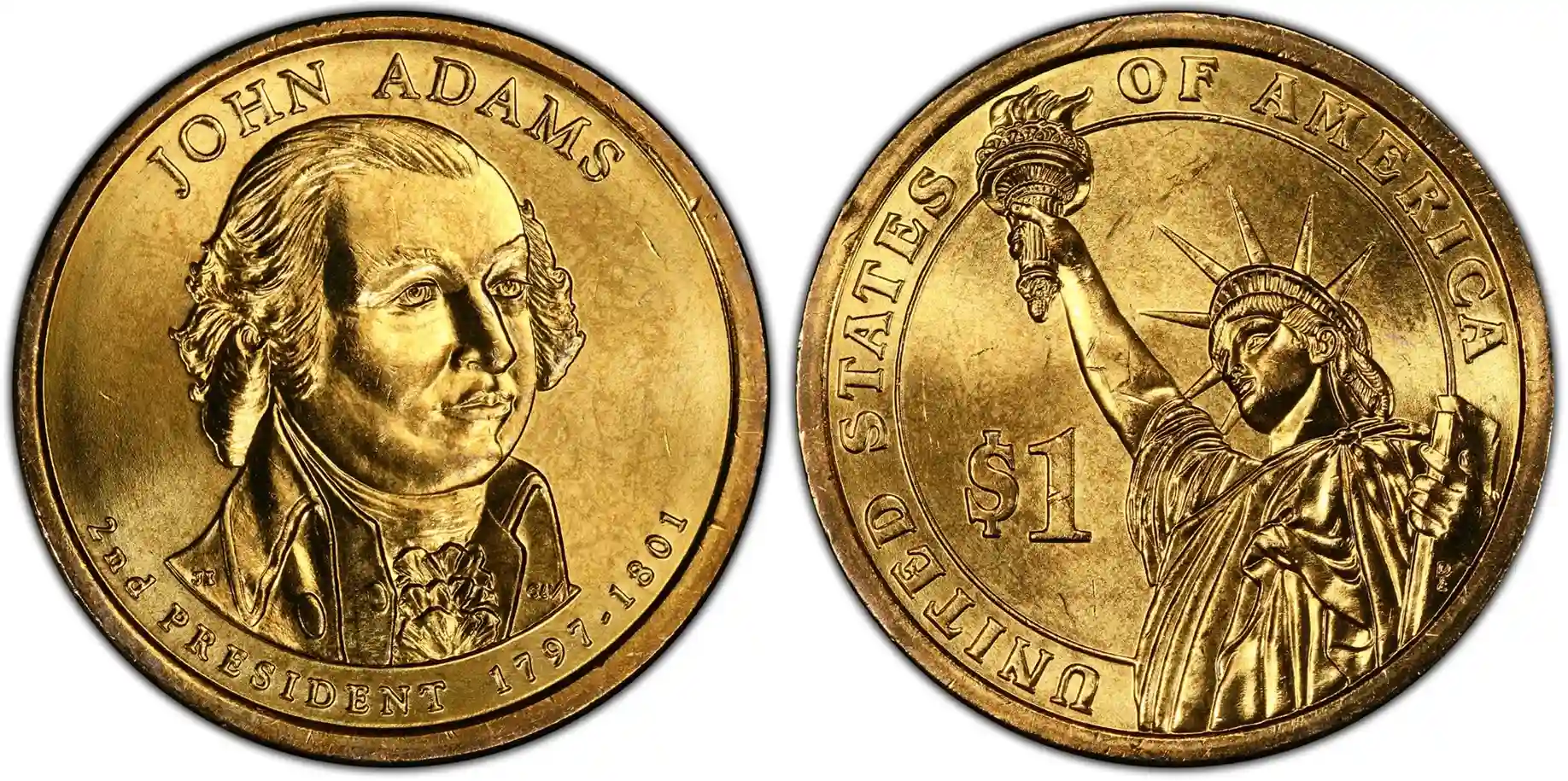
The John Adams $1 coin value becomes more popular every year and reaches $150 and more for unique errors such as the Missing Edge Lettering.
Item History
The United States Mint embarked on an ambitious path in 2007. The government launched the Presidential $1 Coin Program to honor deceased leaders of the nation. The plan dictated the release of four specific designs each calendar year.
The sequence followed the exact chronological order of the presidencies. George Washington occupied the premier slot.
John Adams secured the second position. The program aimed to renew public interest in national history while it provided a functional tool for daily trade.
Setting Expectations: Face Value & Numismatic Premium
Many citizens look at these distinct gold-colored coins and expect a windfall. They assume that any coin that features a past president must carry a historical premium.
You must separate expectations from market realities. In the coin hobby, a vast divide exists between common currency and specialized collector items. Most coins that you find in a cash register do not carry numismatic bonuses.
Only pieces with specific factory defects or exceptional surface preservation transcend their standard face value.
Item Characteristics
| Year | 2007 |
| Diameter | 26.50 mm |
| Weight | 8.10 g |
| Composition | Mostly copper |
| Philadelphia Mintage | 112,420,000 |
| Denver Mintage | 112,140,000 |
Why Local Banks and Vending Machines Are Full of Them
The federal government hoped these coins would replace paper dollar bills in daily commerce. The public resisted the change. People preferred traditional paper currency over heavy metallic discs.
As a result, millions of these dollars sat unused in commercial bank vaults. Eventually, the government distributed large quantities to transit authorities, stamp machines, and vending operators.
Today, when you insert a large bill into a machine, you often receive John Adams dollars as change. They serve their original function as basic units of trade.
The Spending Verdict: Why Circulated Coins Stay at One Dollar
A coin qualifies as circulated once it handles such features:
- Grease
- Friction
- Pocket contact
This wear creates microscopic scratches and dulls the original shine.
Because billions of presidential dollars exist across the nation, no collector will buy a worn example for more than face value. If you possess a John Adams dollar that shows signs of use, it retains a value of exactly one dollar. You can spend it at a store without any financial loss.
The Proof and Satin Finish Proof-Like Exceptions
The San Francisco Mint did not produce coins for regular commerce in 2007. Instead, it focused entirely on high-quality proof sets for collectors. These coins carry an S mint mark on the rim.
Technicians polished the dies to create a mirror-like finish on the flat background areas. They treated the raised portrait with acid to create a frosted white contrast.
The Mint struck each piece twice on slower presses. These proof coins never entered public circulation, and they carry a premium of several dollars today.
Official United States Mint Set Satin Finishes Explained
From 2005 through 2010, the Mint offered a special surface texture for its annual uncirculated coin sets. Workers prepared the coin dies via sandblasting to create a uniform, matte appearance.
Hobbyists call this a satin finish. These coins look distinctly different from standard daily pieces because they lack the traditional lines of a regular coin strike. The surfaces appear smooth and smooth, which appeals to collectors who appreciate design clarity.
The John Adams Dollar Value Chart
| Item Type | Price |
| Circulated | $1.00 |
| MS-63–MS-67 | $1.25–$85.00 |
| MS-68 | $800+ |
| SP-65 | $3.00–$5.00 |
| Proof 70 DCAM | $35.00–$60.00 |
A strict condition barrier exists for standard business strikes. Coins from MS-63 to MS-67 yield small sums from $1.25 to $85.00. The MS-68 grade triggers a sharp price increase to $800 or more because very few regular coins survived without surface marks.
Dollar Errors List
The Missing Edge Lettering
The most famous mistake in the Presidential dollar series involves the edge text. The Mint processed the date, mint mark, and mottos through a separate machine after the main strike.
Sometimes, bins of coins missed this step completely. These pieces left the factory with entirely smooth rims. Because the edge contained the phrase “In God We Trust,” the public dubbed these items “Godless Dollars.”
Value $50–$100+
Double Edge Lettering
Another machine failure occurred when a single coin passed through the edge-lettering device twice. This double run pressed two separate text strings into the thin rim.
In some cases, the coin entered the machine face-up both times, which blurred the text. In other instances, the coin flipped over, which created an inverted second inscription that overlapped the first.
Value $30–$250
Off-Center Strikes
Serious physical deformities also happened during production. If a blank metal disc sat crookedly inside the coining chamber, the dies struck it off-center. This left a portion of the circle blank.
Value $20–$50
Railroad Rims
A partial collar error occurred if the metal retaining walls did not rise to enclose the coin properly during the strike. The metal expanded past its boundary, which created a flanged rim that resembled a train wheel.
Value $50–$1,000+
How to Manage and Appraise Your Collection
Handle with Strict Protection
Never touch the surfaces of the coin with bare fingers. The skin oils inside your fingerprints will react with the manganese brass alloy, leaving permanent dark spots. Wear clean cotton gloves or use plastic-tipped numismatic tongs when you pick up a specimen.
Establish Proper Storage Conditions
Isolate your coins from ambient air and moisture. Avoid cheap plastic flips that contain PVC, as they degrade the metal. Place loose coins into archival-safe cardboard flips or airtight plastic capsules. Store these holders in a cool, dark, dry environment.
Perform the Initial Edge Inspection
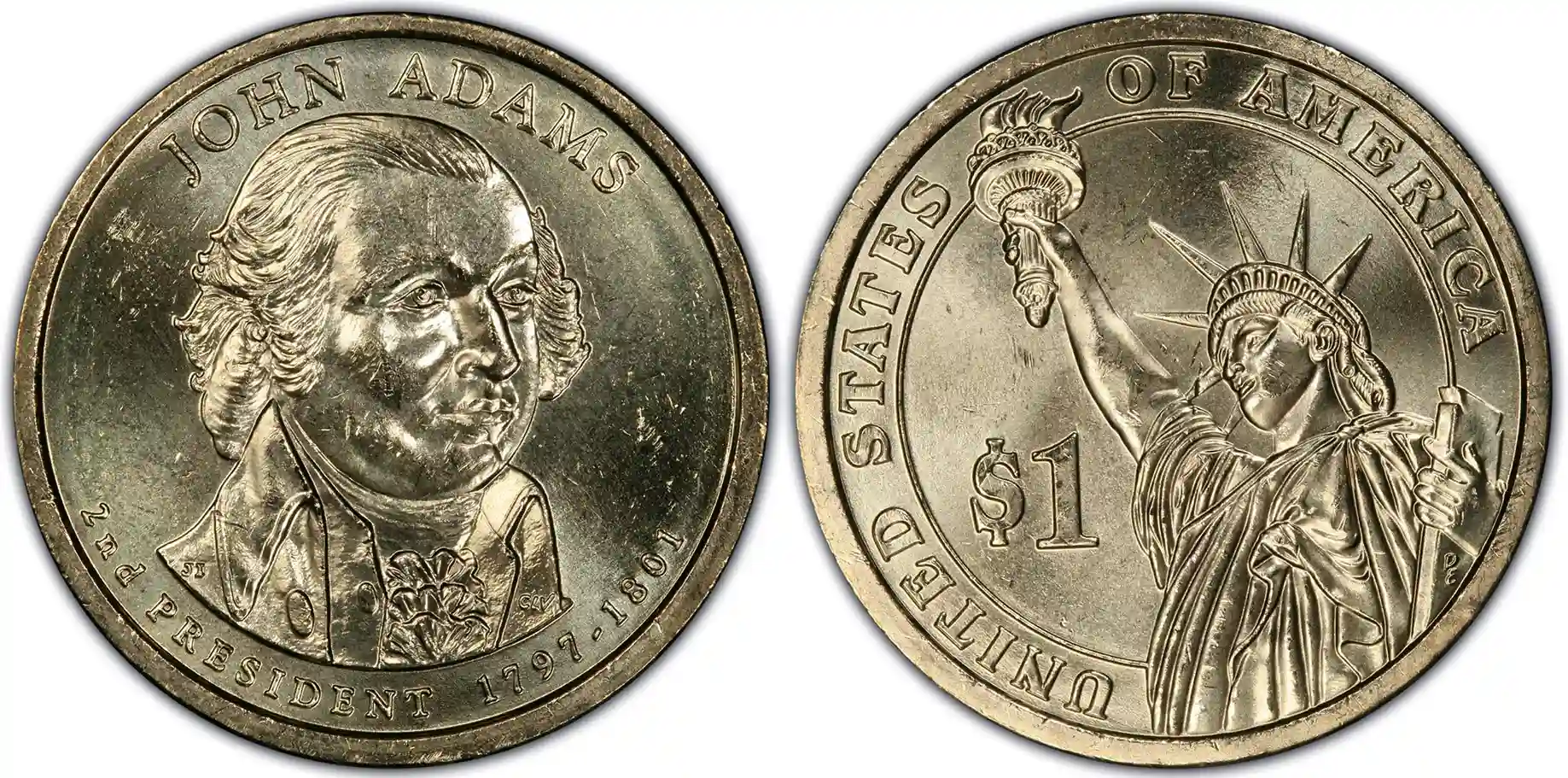
Stand your coins in a row under a bright, single-source desk lamp. Examine the outer rims first. Identify whether you have standard lettering, a blank Plain Edge error, or overlapping Double Edge inscriptions. Separate the standard coins from the verified edge errors.